Today Solar Panel Price in Pakistan 2026 – All Brands & Cities
Pakistan’s solar market is no longer a niche investment — it has become a mainstream financial decision for millions of households, businesses, and farmers across the country. With electricity tariffs from WAPDA and K-Electric crossing Rs. 50 per unit in several DISCO zones and daily load shedding stretching anywhere from 6 to 12 hours in peri-urban and rural areas, the shift toward solar energy has become less of a choice and more of a necessity.
On this page, readers will find the most accurate and up-to-date solar panel price in Pakistan for 20 Oct 2026 — covering per-watt wholesale rates, brand-wise pricing, city-wise comparisons, A-grade vs B-grade differences, and the latest regulatory update on NEPRA’s net billing policy. All figures referenced here are sourced from Pakistan’s primary wholesale solar markets: Hall Road Lahore, Saddar Karachi, College Road Rawalpindi, and G-8 Islamabad.
Whether someone is planning a 5kW home system in Multan or a 20kW commercial rooftop project in Karachi, this guide covers every variable that affects the final price of solar panels in Pakistan today.
Today Solar Panel Price in Pakistan 20 Oct 2026 Per Watt
The table below gives a quick snapshot of the current solar panel per watt price in Pakistan as of 20 Oct 2026, for A-grade, Tier-1 documented N-Type panels. These are wholesale reference rates — final prices may vary slightly by city, dealer, pallet quantity, and stock batch.
| Brand | Technology | Grade | Price Per Watt | Approx. 585W Panel Price |
|---|---|---|---|---|
| LONGi Hi-Mo X10 | N-Type HPBC 2.0 | A-Grade Tier-1 | Rs. 45/W | ~Rs. 26,325 |
| Jinko Tiger Neo | N-Type Bifacial | A-Grade Tier-1 | Rs. 45/W | ~Rs. 26,325 |
| Canadian Solar TopCon | N-Type TopCon Bifacial | A-Grade Tier-1 | Rs. 48/W | ~Rs. 28,080 |
| JA Solar N-Type | N-Type Bifacial | A-Grade Tier-1 | Rs. 44.50/W | ~Rs. 26,033 |
| Trina N-Type Mono | N-Type Monocrystalline | A-Grade Tier-1 | Rs. 42/W | ~Rs. 24,570 |
| AstroNergy N-Type | N-Type TopCon Bifacial 20BB | A-Grade Tier-1 | Rs. 40/W | ~Rs. 23,400 |
| Inverex N-Type HJT | N-Type HJT Bifacial Steel Frame | A-Grade | Rs. 46–50/W | ~Rs. 26,910–29,250 |
| A-Grade (Generic N-Type) | N-Type Bifacial | A-Grade (Multi-Brand) | Rs. 40–44/W | ~Rs. 23,400–25,740 |
⚠️ Price Disclaimer: These rates are reference wholesale figures for 20 Oct 2026. Actual quotes can vary based on dealer margin, documentation status, pallet quantity, and daily market movement. Always confirm with an authorised importer before finalising a purchase.
Brand-Wise Solar Panel Price in Pakistan – 20 Oct 2026
Choosing the right solar panel brand in Pakistan is just as important as the price itself. Below is a detailed breakdown of the leading Tier-1 brands currently dominating the Pakistani wholesale and retail market, along with their specifications, typical wattages, and 20 Oct 2026 price ranges.
LONGi Solar Panel Price in Pakistan
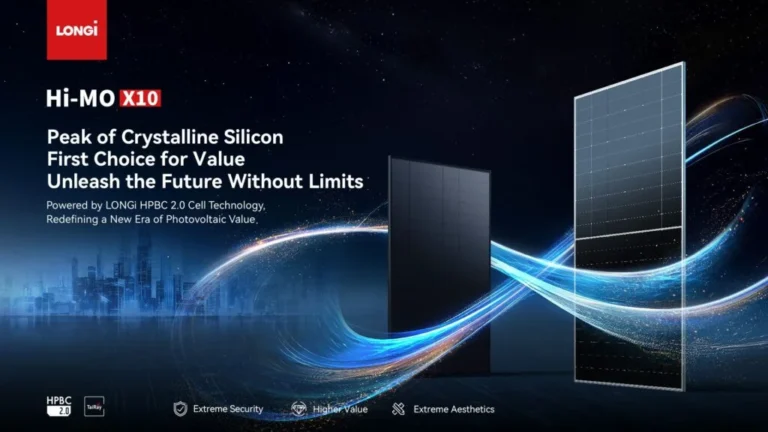
LONGi is widely regarded as one of the most trusted names in Pakistan’s solar market. The brand’s Hi-Mo X10 series — equipped with HPBC 2.0 (Hybrid Passivated Back Contact) technology — has become particularly popular in 2025–2026 for rooftop residential and commercial installations. LONGi panels are known for an extremely low temperature coefficient, which means they lose far less output during Pakistan’s peak summer months compared to conventional PERC modules.
- Technology: N-Type HPBC 2.0 (Anti-Glare, Anti-Shading)
- Popular Wattage: 575W – 615W
- Efficiency: Up to 23.3%
- 20 Oct 2026 Per Watt Price: Rs. 44.50 – Rs. 49/W
- Approx. 585W Panel Price: ~Rs. 26,033 – Rs. 28,665
- Warranty: 12-year product + 25-year linear performance
- Grade: A-Grade, Tier-1, Fully Documented
LONGi’s Hi-Mo X10 is the recommended choice for new rooftop installations in 2026 — particularly in high-heat areas like Multan, Rahim Yar Khan, and interior Sindh — where heat tolerance and long-term degradation performance directly impact system ROI.
Jinko Solar Panel Price in Pakistan
Jinko Solar holds the largest market share in Pakistan by shipment volume and consistently ranks as the country’s most-installed Tier-1 brand. The Tiger Neo N-Type bifacial series offers an efficiency of up to 22.8% and a first-year degradation rate of only 1%, making it one of the best long-term performers available today.
- Technology: N-Type Bifacial Double Glass
- Popular Wattage: 570W – 615W
- Efficiency: Up to 22.8%
- 20 Oct 2026 Per Watt Price: Rs. 44 – Rs. 49.50/W
- Approx. 585W Panel Price: ~Rs. 25,740 – Rs. 28,958
- Warranty: 12-year product + 25-year linear performance
- Grade: A-Grade, Tier-1, IEC Certified
Jinko panels are available from authorised dealers in Lahore, Karachi, and Islamabad. Buyers can verify authenticity through the Jinko Flash Track App using the panel’s serial number before finalising any purchase.
Canadian Solar Panel Price in Pakistan
Canadian Solar commands a premium position in Pakistan’s market, primarily due to the brand’s TOPCon (Tunnel Oxide Passivated Contact) bifacial technology, which delivers superior low-light performance — a critical advantage during Pakistan’s cloudy monsoon season from July through September. Canadian Solar panels are priced slightly higher than LONGi and Jinko but are widely preferred for commercial and industrial projects where long-term bankability matters.
- Technology: N-Type TopCon Bifacial
- Popular Wattage: 570W – 610W
- Efficiency: Up to 22.5%
- 20 Oct 2026 Per Watt Price: Rs. 43 – Rs. 49.60/W
- Approx. 585W Panel Price: ~Rs. 25,155 – Rs. 29,016
- Warranty: 12-year product + 30-year performance
- Grade: A-Grade, Tier-1, Full Documentation
JA Solar Panel Price in Pakistan
JA Solar has consistently grown its market share in Pakistan over the last two years by offering Tier-1 quality at a slightly lower price point than Jinko or Canadian. The brand’s N-Type bifacial panels perform exceptionally well in Pakistan’s high-irradiance environment and are fully certified under IEC standards — making them eligible for NEPRA’s prosumer (net billing) registration.
- Technology: N-Type Bifacial (HPBC & DeepBlue 4.0)
- Popular Wattage: 575W – 610W
- Efficiency: Up to 22.4%
- 20 Oct 2026 Per Watt Price: Rs. 42 – Rs. 47/W
- Approx. 585W Panel Price: ~Rs. 24,570 – Rs. 27,495
- Warranty: 12-year product + 25-year linear performance
- Grade: A-Grade, Tier-1, Documented
Trina Solar Panel Price in Pakistan
Trina Solar’s Vertex N series panels use multi-busbar cell technology that reduces internal resistance losses and improves overall system yield — a technically sound choice for rooftop systems where maximum output per square metre is a priority. Trina is particularly cost-effective among Tier-1 N-Type options and offers one of the more affordable entry points into high-efficiency solar in Pakistan.
- Technology: N-Type Monocrystalline / Vertex Series
- Popular Wattage: 565W – 605W
- Efficiency: Up to 23.2%
- 20 Oct 2026 Per Watt Price: Rs. 40 – Rs. 48/W
- Approx. 585W Panel Price: ~Rs. 23,400 – Rs. 28,080
- Warranty: 12-year product + 25-year performance
- Grade: A-Grade, Tier-1
AstroNergy (Astronergy) Solar Panel Price in Pakistan
AstroNergy — the solar division of CHINT Group — has emerged as one of the most competitive value-for-money options in Pakistan’s 2026 wholesale market. Their N-Type TopCon Bifacial 20BB panels are priced below most branded Tier-1 competitors while still carrying full IEC certification and import documentation.
- Technology: N-Type TopCon Bifacial (20BB)
- Popular Wattage: 575W – 610W
- 20 Oct 2026 Per Watt Price: Rs. 40/W
- Approx. 585W Panel Price: ~Rs. 23,400
- Grade: A-Grade, Tier-1, Documented
A-Grade vs B-Grade Solar Panel Price in Pakistan – What’s the Real Difference?
One of the most important distinctions every solar buyer in Pakistan must understand before making a purchase is the difference between A-grade and B-grade solar panels. The price gap between the two can range from Rs. 5 to Rs. 15 per watt, but the long-term implications are far more significant than the upfront savings.
| Feature | A-Grade Panel | B-Grade Panel |
|---|---|---|
| IEC Certification | ✅ Yes | ❌ No |
| Manufacturer Warranty | ✅ 12–15 Years Product | ❌ None or Very Limited |
| NEPRA Net Billing Eligibility | ✅ Fully Eligible | ❌ Not Eligible |
| Degradation Rate | 0.4% – 0.55% per year | 1.5% – 2.5% per year |
| Useful Lifespan | 25 – 30 Years | 8 – 12 Years |
| Import Documentation | ✅ Full Documented | ❌ Often Undocumented |
| Best Use Case | Homes, Offices, Agriculture | Street Lights, Sheds, Remote Off-Grid |
Expert Recommendation: For any grid-tied, hybrid, or net billing application in Pakistan, A-grade Tier-1 panels are the only advisable choice. B-grade panels may appear attractive at Rs. 25–35/W, but their faster degradation, absence of documentation, and ineligibility for NEPRA registration make them a financially poor long-term decision — particularly in Pakistan’s high-heat, high-irradiance climate.
City-Wise Solar Panel Price in Pakistan – 20 Oct 2026
Solar panel prices in Pakistan are not uniform across the country. Transportation costs, local dealer competition, proximity to port cities, and DISCO-specific installation demand all contribute to regional price variation. The breakdown below covers the current solar panel rate today in Pakistan’s major cities.
| City | DISCO | Per Watt Price (A-Grade N-Type) | Market Notes |
|---|---|---|---|
| Lahore | LESCO | Rs. 40–43/W | Largest Punjab solar market; Rs. 0.25 extra for loose (non-pallet) panels |
| Karachi | K-Electric | Rs. 39–42/W | Port city — lowest prices nationwide due to direct import access |
| Islamabad | IESCO | Rs. 41–44/W | Premium market; higher demand and slightly elevated transport cost |
| Rawalpindi | IESCO | Rs. 41–44/W | Same market as Islamabad; growing residential solar adoption in 2026 |
| Faisalabad | FESCO | Rs. 40–43/W | Major industrial city; commercial solar installations growing rapidly |
| Multan | MEPCO | Rs. 40–43/W | Highest sun hours in Pakistan — one of the best ROI cities for solar |
| Peshawar | PESCO | Rs. 42–47/W | KPK market; slightly higher due to logistics distance from port |
| Quetta | QESCO | Rs. 42–47/W | Remote location adds transport cost but solar irradiance is excellent year-round |
Buying Tip: Buyers in Lahore, Multan, and Faisalabad can leverage proximity to Hall Road and regional wholesale markets to negotiate better rates. Buyers in Islamabad, Peshawar, and Quetta should factor in Rs. 1–4/W higher pricing compared to Lahore pallet rates when calculating their system budget.
N-Type vs P-Type Solar Panels in Pakistan – Which One to Choose in 2026?
Pakistan’s solar market has undergone a significant technology shift in the last two years. While P-Type PERC (Passivated Emitter and Rear Cell) panels dominated sales through 2022–2023, the market has decisively moved toward N-Type TOPCon and HPBC modules in 2025–2026. Understanding this difference is now essential for any informed solar buyer in Pakistan.
| Parameter | N-Type (TOPCon / HPBC) | P-Type (PERC) |
|---|---|---|
| Efficiency Range | 22% – 23.5% | 20% – 21.5% |
| Degradation Per Year | 0.35% – 0.45% | 0.55% – 0.70% |
| Performance in Heat | Better (lower temp. coefficient) | Moderate |
| Low-Light Performance | Excellent (bifacial models) | Standard |
| LID (Light-Induced Degradation) | Immune to LID | Slightly susceptible to LID |
| Price Range (20 Oct 2026) | Rs. 40–50/W | Rs. 28–38/W |
| Recommended For | All new installations (2026) | Budget off-grid, small systems |
For any new solar installation in Pakistan in 2026, N-Type panels are the recommended investment. The performance gap in Pakistan’s extreme heat conditions — especially during May–August — makes N-Type TOPCon or HPBC modules the more financially sound choice over a 25-year system life, even if the upfront per-watt rate is slightly higher than older P-Type PERC alternatives.
NEPRA Net Billing Policy 2026 – What Every Solar Buyer Must Know Before Installing
One of the most consequential regulatory changes in Pakistan’s solar sector took effect on February 9, 2026, when the National Electric Power Regulatory Authority (NEPRA) formally notified the NEPRA (Prosumer) Regulations, 2026 — replacing the decade-old Net Metering Regulations 2015 with a new net billing framework.
This policy shift has fundamentally altered the economics of rooftop solar in Pakistan and must be factored into every new installation decision made in 2026 and beyond.
What Changed — Net Metering vs. Net Billing
Under the old net metering system, a solar prosumer who exported 100 units of electricity to the grid during the day and consumed 100 units at night would effectively pay nothing on their electricity bill — the units were exchanged on a 1:1 basis, with a buyback rate of approximately Rs. 25.32 per unit for existing consumers.
Under the new net billing system introduced in February 2026, this one-to-one exchange has ended for new applicants. Key changes include:
- New Buyback Rate: Rs. 8.13 per unit (down from Rs. 25.32/unit for new consumers)
- Import Rate: Consumers still buy electricity from DISCOs at prevailing tariffs of Rs. 40–50/unit
- Contract Duration: Reduced from 7 years to 5 years, renewable by mutual consent
- Existing Consumers: Protected — their existing contracts remain valid at old rates until expiry
- Maximum System Size: Capped at 1MW; system cannot exceed sanctioned consumer load
- Concurrence Fee: Rs. 1,000 per kilowatt (non-refundable)
- Metering: Bi-directional or dual-meter setup is mandatory for all new installations
How Net Billing Affects the ROI of Solar in Pakistan
The reduced export rate means that self-consumption is now significantly more valuable than grid export. Every unit consumed directly from the solar panels saves the consumer Rs. 40–50. Every unit exported to the grid now earns only Rs. 8–11. This creates a clear strategic direction for 2026 buyers:
- Run heavy loads — air conditioners, geysers, water pumps, washing machines — during solar production hours (typically 8:00 AM to 5:00 PM)
- Invest in a hybrid solar system with battery storage to maximise self-consumption and minimise grid dependence
- Avoid oversizing the system beyond daytime consumption capacity
- The payback period for on-grid systems has extended from 2–3 years to approximately 4–5 years under the new regime
- For hybrid systems, the payback remains more competitive given higher self-consumption ratios
⚡ Key Takeaway for 2026 Buyers: With net billing now replacing net metering, the hybrid solar system (solar + battery + grid) has become the most financially intelligent installation type for new residential and commercial buyers in Pakistan. Self-consumption is the new ROI driver.
Solar Panel Investment ROI in Pakistan – Does Solar Still Make Sense in 2026?
Despite the NEPRA net billing policy change, solar energy remains a strong financial investment in Pakistan in 2026. The combination of historically low panel prices and persistently high grid electricity tariffs creates a compelling case — particularly for consumers with high daytime power consumption.
Here is a representative ROI calculation for a typical 5kW hybrid solar system in Lahore as of 20 Oct 2026:
| Component | Estimated Cost (Rs.) |
|---|---|
| 9 × 585W N-Type Panels (LONGi @ Rs. 45/W) | Rs. 2,36,925 |
| 5kW Hybrid Inverter (Sungrow / GoodWe / Sofar) | Rs. 1,20,000 – Rs. 1,80,000 |
| 5kWh LFP Battery (Optional) | Rs. 1,50,000 – Rs. 2,50,000 |
| Mounting Structure, Wiring, DB Box | Rs. 50,000 – Rs. 80,000 |
| Installation + NEPRA Concurrence Fee | Rs. 25,000 – Rs. 40,000 |
| Total Estimated System Cost (with battery) | Rs. 7,50,000 – Rs. 9,50,000 |
- Monthly Electricity Bill Saving: Rs. 15,000 – Rs. 22,000 (for a household consuming 600–800 units/month).
- Estimated Payback Period: 3.5 – 5 years (hybrid system with battery, self-consumption optimised).
- Post-Payback Benefit: Virtually free electricity for 20+ years with minimal maintenance.
How Many Solar Panels Are Needed for a Pakistani Home? – System Sizing Guide
One of the most common questions from prospective solar buyers in Pakistan is: how many panels does a given house actually need? The answer depends on the household’s monthly consumption in kilowatt-hours (kWh), the chosen panel wattage, and available roof space.
| House Size | Avg. Monthly Units | Recommended System | No. of 585W Panels |
|---|---|---|---|
| 3 Marla (Small Home) | 150 – 250 units | 1.5kW – 2kW | 3 – 4 Panels |
| 5 Marla | 400 – 600 units | 5kW | 9 Panels |
| 10 Marla | 700 – 1,000 units | 8kW – 10kW | 14 – 18 Panels |
| 1 Kanal | 1,000 – 1,500 units | 10kW – 15kW | 18 – 26 Panels |
| Commercial (Office/Shop) | 2,000+ units | 20kW – 50kW+ | 34 – 86+ Panels |
7 Expert Tips for Buying Solar Panels in Pakistan in 2026
- Always Verify Documentation: Insist on the original import invoice, IEC certification, and manufacturer warranty card at the time of purchase. Any seller who cannot provide complete documentation should be avoided.
- Buy Pallet Quantities for Lower Per-Watt Rates: Wholesale prices (per pallet of 30–36 panels) are typically Rs. 0.25–1/W cheaper than buying loose panels. For a 5kW to 10kW system, buying in pallet quantities saves Rs. 5,000–15,000.
- Authenticate Panel Serial Numbers: Jinko panels can be verified through the Jinko Flash Track App. LONGi and Canadian Solar buyers should match serial numbers on the panel label, carton, and purchase invoice before accepting delivery.
- Compare Dealer Quotes Across Cities: Karachi dealers often have the lowest rates due to port proximity. Buyers from Punjab can save by purchasing ex-Karachi and arranging transport, especially for larger commercial system orders.
- Choose Hybrid Over On-Grid for 2026: With net billing export rates now at Rs. 8–11/unit, a hybrid system with battery storage maximises self-consumption savings and reduces dependence on low-rate grid export.
- Avoid B-Grade Panels for Grid-Tied Systems: B-grade panels are ineligible for NEPRA net billing registration, void most inverter warranties when mixed in string systems, and degrade 2–3× faster than A-grade modules.
- Check DISCO Transformer Capacity: Under NEPRA 2026 regulations, no new net billing connection is permitted if solar generation on a transformer exceeds 80% of its rated capacity. Confirm this limit with the relevant DISCO before finalising a system size.
Frequently Asked Questions – Solar Panel Price in Pakistan 20 Oct 2026
What is the solar panel price per watt in Pakistan today?
As of 20 Oct 2026, A-grade N-Type solar panel prices in Pakistan range from Rs. 40 to Rs. 50 per watt depending on the brand and technology. LONGi Hi-Mo X10 and Jinko Tiger Neo are priced at approximately Rs. 45/W, JA Solar at Rs. 44.50/W, Trina N-Type at Rs. 42/W, AstroNergy at Rs. 40/W, and Canadian TopCon at Rs. 48/W. These are wholesale reference rates from major markets in Lahore, Karachi, and Islamabad.
What is the price of a 585W solar panel in Pakistan?
The price of a 585W A-grade N-Type solar panel in Pakistan ranges from approximately Rs. 23,400 to Rs. 28,665 as of 20 Oct 2026, depending on the brand. AstroNergy at Rs. 40/W gives a 585W panel at ~Rs. 23,400, while LONGi Hi-Mo X10 at Rs. 45/W gives ~Rs. 26,325, and Canadian TopCon at Rs. 48/W gives approximately Rs. 28,080 per panel. Final prices vary by city, dealer, and documentation status.
Which solar panel brand is best in Pakistan in 2026?
The top three Tier-1 solar panel brands for Pakistan in 2026 are: (1) LONGi Hi-Mo X10 — best for high-heat areas due to superior heat tolerance and HPBC 2.0 technology; (2) Jinko Tiger Neo — highest efficiency (up to 22.8%) and widest availability; (3) Canadian Solar TopCon — best for commercial projects requiring premium low-light performance and long-term bankability. All three are fully documented, IEC-certified, and eligible for NEPRA net billing registration.
What is the difference between net metering and net billing in Pakistan?
Under the old net metering system (replaced in February 2026), solar consumers exchanged electricity with the grid on a 1:1 basis, effectively paying nothing if their export equalled their import. Under the new net billing system (NEPRA Prosumer Regulations 2026), new solar consumers receive only Rs. 8.13 per unit for electricity exported to the grid, while continuing to pay Rs. 40–50/unit for electricity imported from the grid. Existing net metering consumers are protected under their current contracts until expiry.
Why do solar panel prices differ from city to city in Pakistan?
Solar panel prices vary across Pakistani cities due to transportation costs from import ports, proximity to wholesale markets, local dealer margins, and regional demand levels. Karachi typically has the lowest prices as a direct port city. Lahore and central Punjab follow with competitive rates due to strong wholesale competition. Cities like Peshawar and Quetta carry slightly higher rates due to longer supply chains and higher logistics costs from Karachi and Lahore markets.
How many solar panels are needed for a 5-marla house in Pakistan?
A typical 5-marla house in Pakistan consuming 400–600 units per month requires a 5kW solar system. Using 585W panels, this translates to approximately 9 panels. The total installed cost of a 5kW hybrid system in Pakistan today 20 Oct 2026 ranges from Rs. 7,50,000 to Rs. 9,50,000 including inverter, battery, mounting structure, wiring, and installation — with a payback period of approximately 3.5 to 5 years.
Are B-grade solar panels worth buying in Pakistan?
B-grade solar panels are not recommended for grid-tied or hybrid systems in Pakistan. They carry no IEC certification, no manufacturer warranty, are ineligible for NEPRA net billing registration, and degrade 2–3× faster than A-grade modules — meaning significantly less energy production over a 10–25 year period. B-grade panels are only suitable for isolated off-grid applications such as street lighting, agricultural sheds, or remote locations where documentation and longevity are not priorities.
Are solar panels still worth buying in Pakistan after the net billing change?
Yes, solar panels remain a financially sound investment in Pakistan in 2026, particularly for consumers who can shift heavy loads to daytime solar hours and use a hybrid system with battery storage to maximise self-consumption. While the payback period for purely on-grid systems has extended from 2–3 years to 4–5 years under net billing, the combination of falling panel prices (historically low at Rs. 40–45/W for N-Type modules) and rising grid tariffs (Rs. 40–50/unit) still supports a strong long-term ROI for most Pakistani households and businesses.
Conclusion – Making a Smart Solar Investment in Pakistan 20 Oct 2026
Pakistan’s solar market in 2026 presents both opportunity and complexity. On one hand, panel prices are historically affordable — A-grade N-Type modules from Tier-1 brands like LONGi, Jinko, and JA Solar are available in the Rs. 40–45/W range, levels that were unimaginable just three years ago. On the other hand, the NEPRA net billing policy has fundamentally changed the economics of surplus generation, making system sizing strategy and self-consumption planning more important than ever before.
For homeowners and businesses looking to install solar today 20 Oct 2026, the clearest guidance is this: invest in A-grade, fully documented N-Type Tier-1 panels from an authorised dealer, size the system to daytime consumption rather than total monthly units, and strongly consider a hybrid setup with battery storage to maximise the value of every kilowatt-hour generated.
The transition to solar is no longer about whether to invest — given Pakistan’s electricity tariff trajectory, the question is simply which system design delivers the best return. This guide will be updated daily with the latest per-watt rates from Pakistan’s wholesale markets as market conditions evolve.
For personalised system sizing, verified wholesale pricing, and NEPRA net billing registration assistance, readers are advised to consult a certified solar installer or authorised brand distributor in their city.